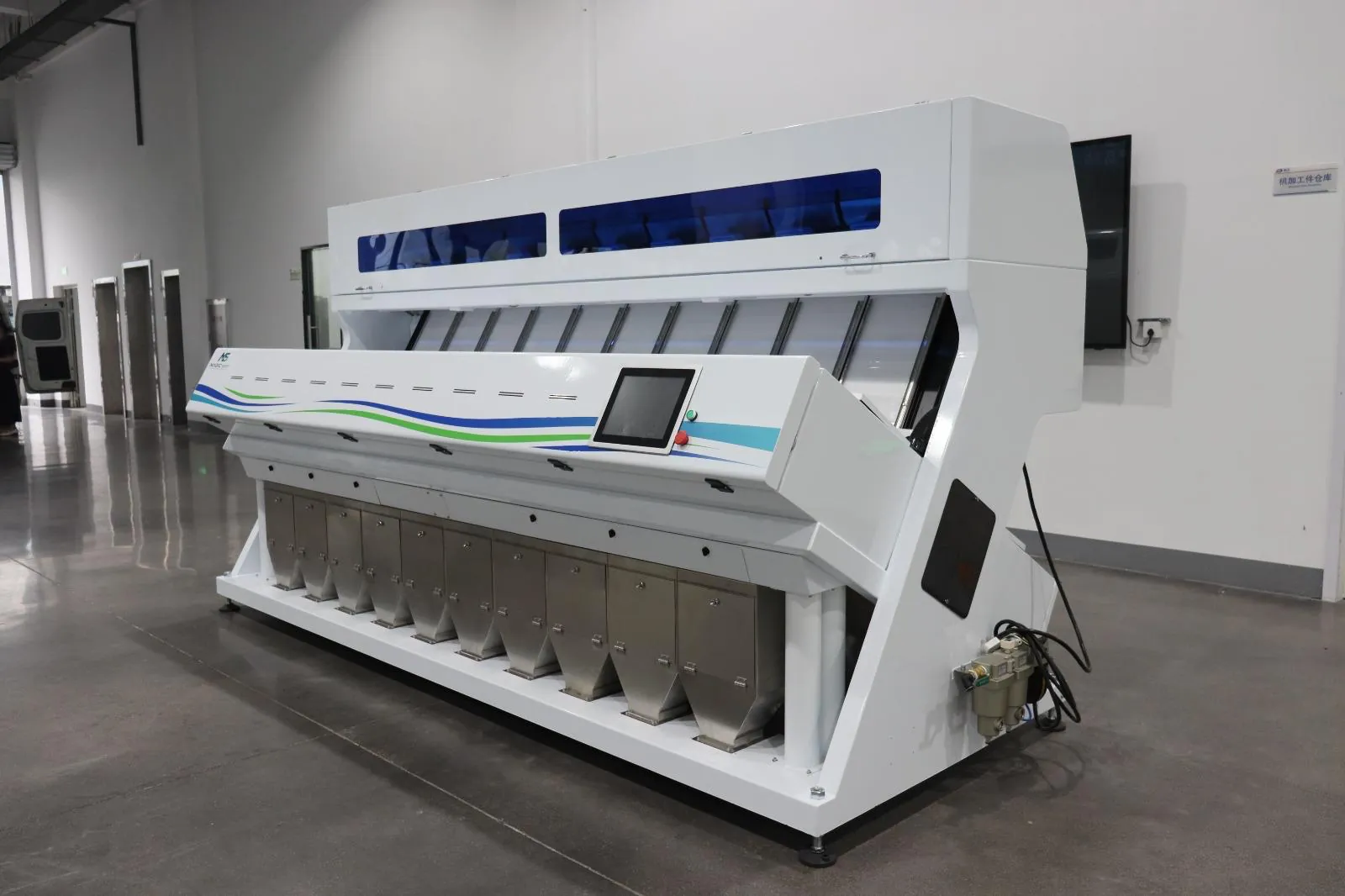
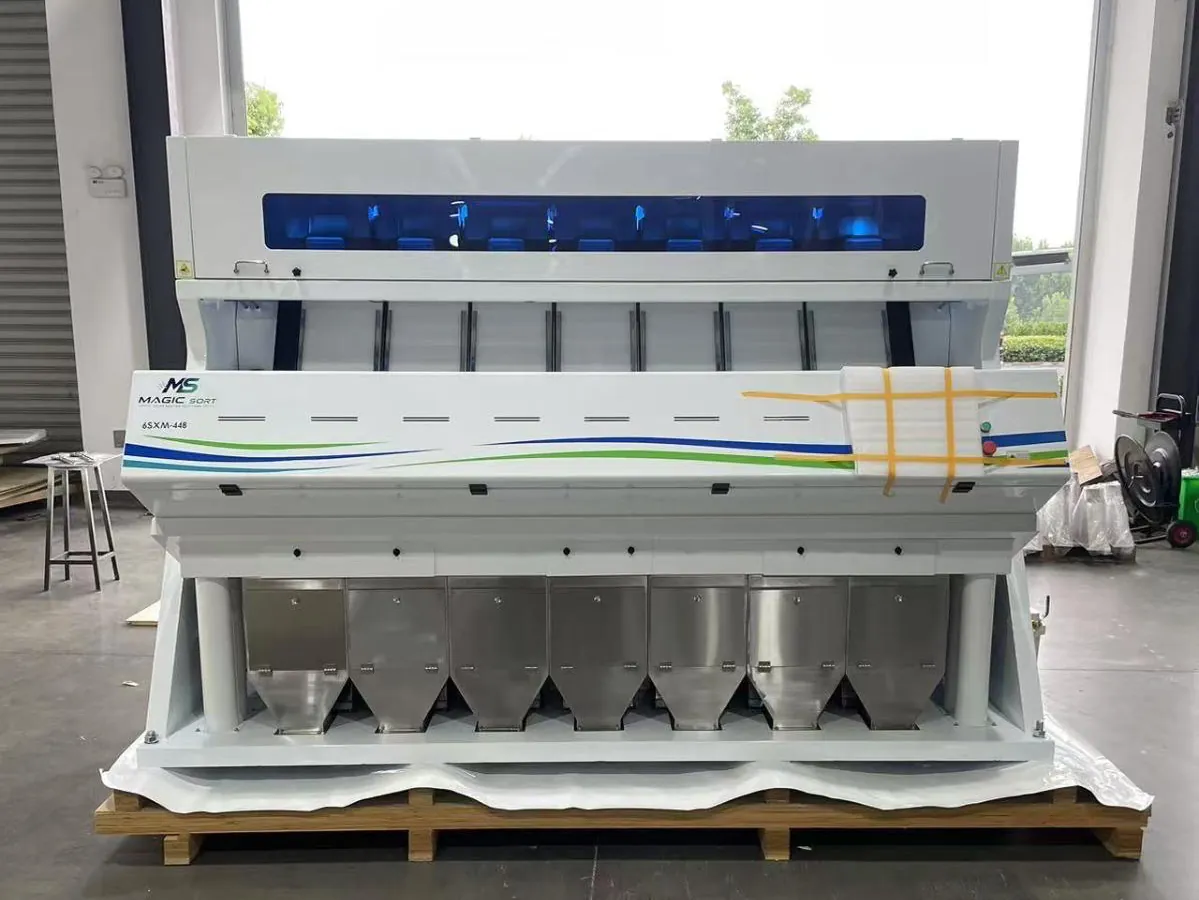
Uniform, impurity-free product
Discolored and defective grains and foreign material are removed before packing, so your product leaves with the first-grade look that buyers and export markets expect.
RGB color sorters for rice and legumes
Deep learning color sorting uses artificial intelligence. 5400-pixel CCD sensors capture both sides of every grain, and high-speed air ejectors remove defects and impurities on the spot — with accuracy up to 99.99% and capacities from 4 to 15 tons per hour.
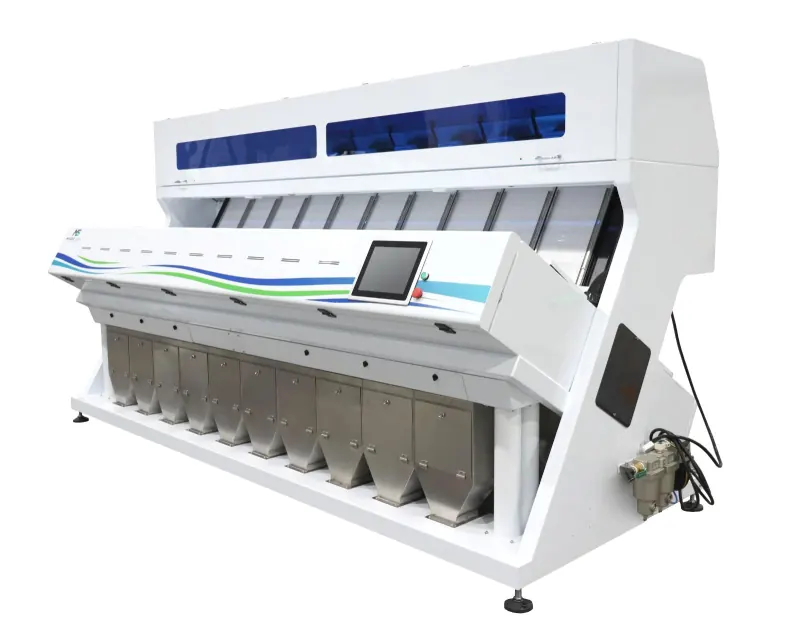
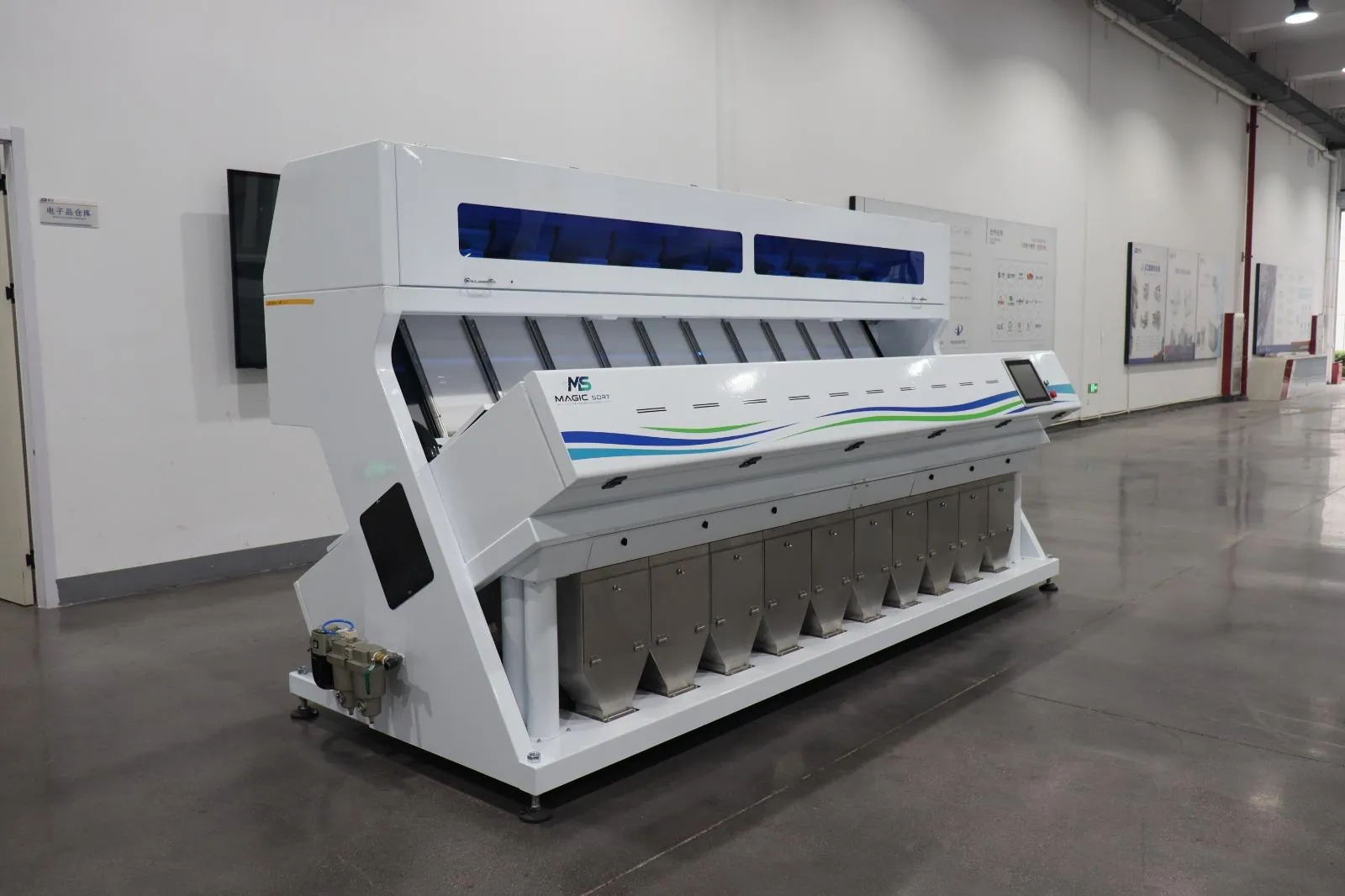
JM10 · 10 chutes
* Under standard operating conditions. Figures vary with the material and its impurity level.
The value
Discolored and defective grains and foreign material are removed before packing, so your product leaves with the first-grade look that buyers and export markets expect.
A carryover ratio of at least 10:1 (bad : good), plus a second sort that re-inspects the reject stream and recovers the good grains in it.
4 to 15 tons per hour from a single machine, with automatic dust cleaning and fault self-diagnosis to keep the line running.
Technology
Deep learning color sorting uses artificial intelligence, and the Magic Sort RGB series combines it with industrial optics and real-time processing in one machine.
Deep learning color sorting uses artificial intelligence to recognise defective grains and impurities with high accuracy.
Ultra-high-sensitivity sensors behind industrial-grade custom lenses pick up the subtlest color differences between grains.
Front and rear sorting boxes image both faces of every grain, so a defect can’t hide on the far side.
RGB, grayscale, shape and size algorithms work together to push sorting accuracy to its peak.
Real-time processing analyses each image and fires the solenoid valves to blow the defective grain out on the spot.
Pick the material program, adjust the sensitivity and save your settings. Feed vibrators are adjustable chute by chute.
Economy cuts air consumption and good-product loss; Precision maximises the purity of the final product.
Wipers clean the sorting-box glass automatically at intervals you set, and chutes held at about 40°C keep material flowing steadily.
Every part that touches the product is made of stainless steel or non-toxic metal.
How it works
Watch every grain get inspected and sorted in mid-fall.
Material moves from the hopper onto vibratory feeders that spread it evenly across the chutes.
Grains slide down heated chutes that line them up into a steady stream toward the sorting box.
Under calibrated lighting, CCD cameras image each grain from both sides and artificial intelligence analyses the image instantly against your acceptance criteria.
The ejector fires a jet of compressed air that knocks the defective grain into the reject outlet, while good product carries on to the accept outlet.
Second sort: the reject stream is re-inspected to recover its good grains before final rejection.
Applications
A saved sorting program for each product removes discolored and defective grains and foreign material before packing.
The machines sort all kinds of legumes. Send us a photo of your product on WhatsApp and we’ll recommend the model that fits.
Models
Choose by the capacity you need. All three share the same technology and the same sorting accuracy.
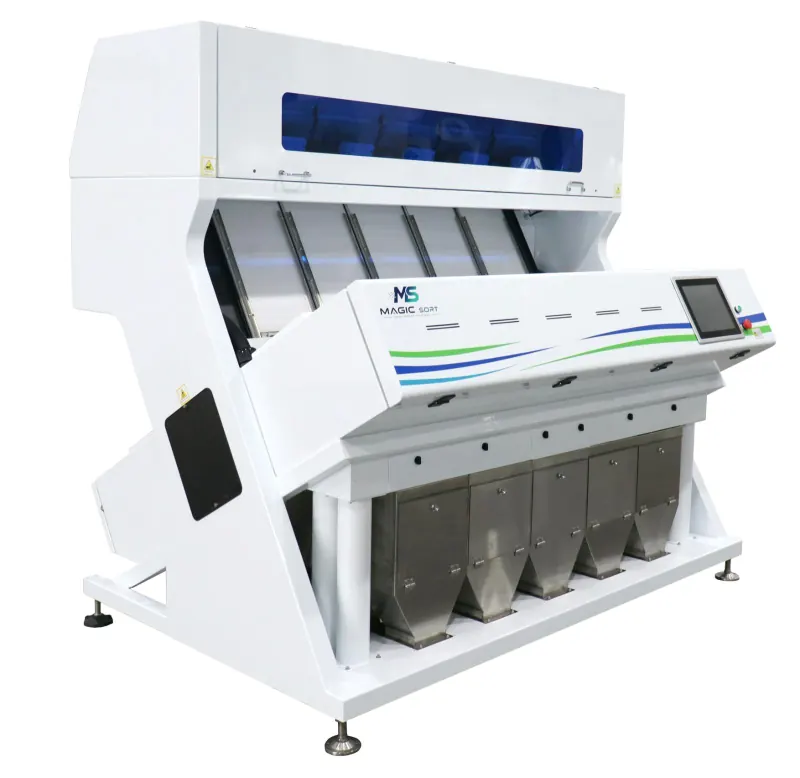
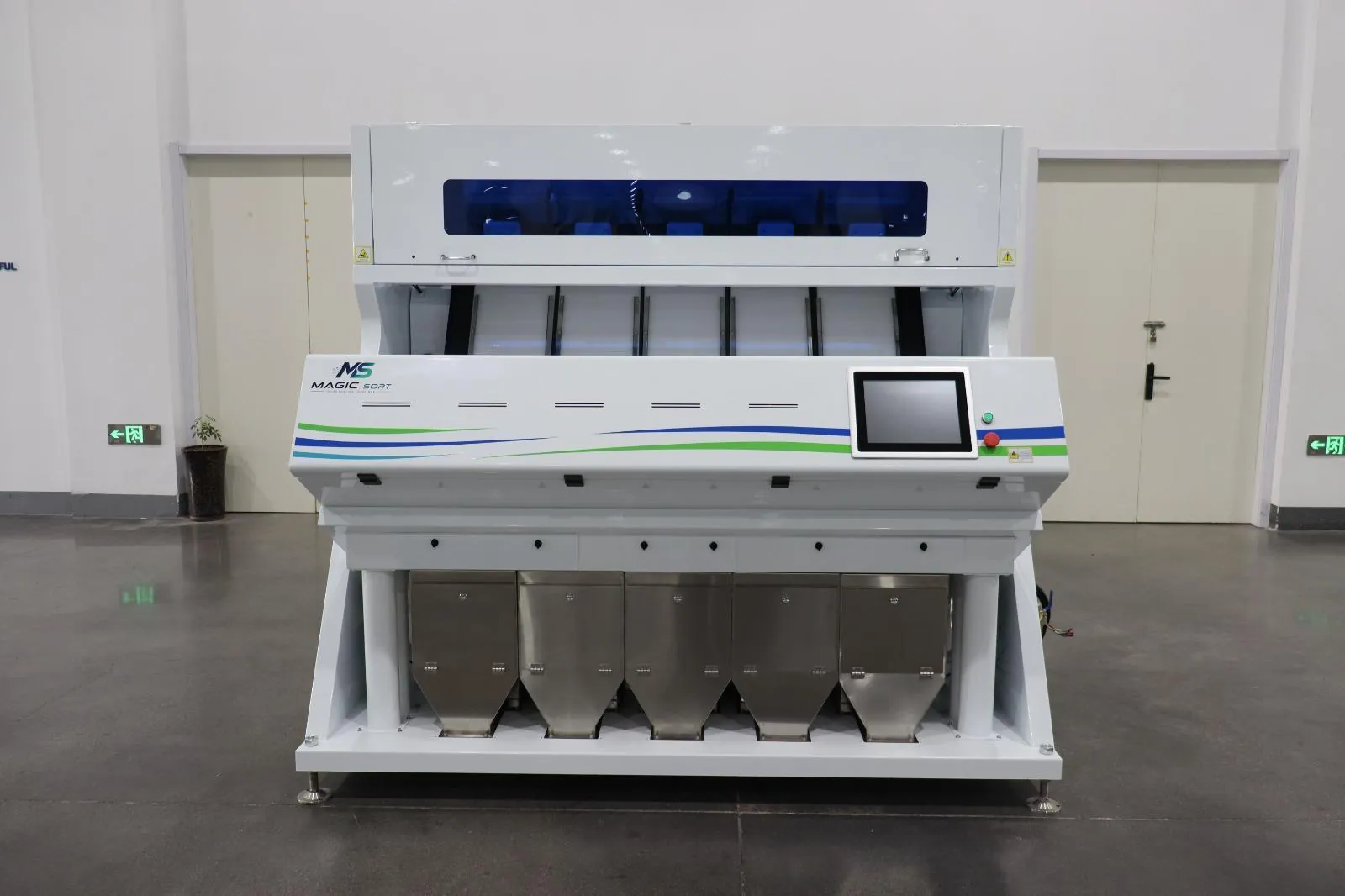
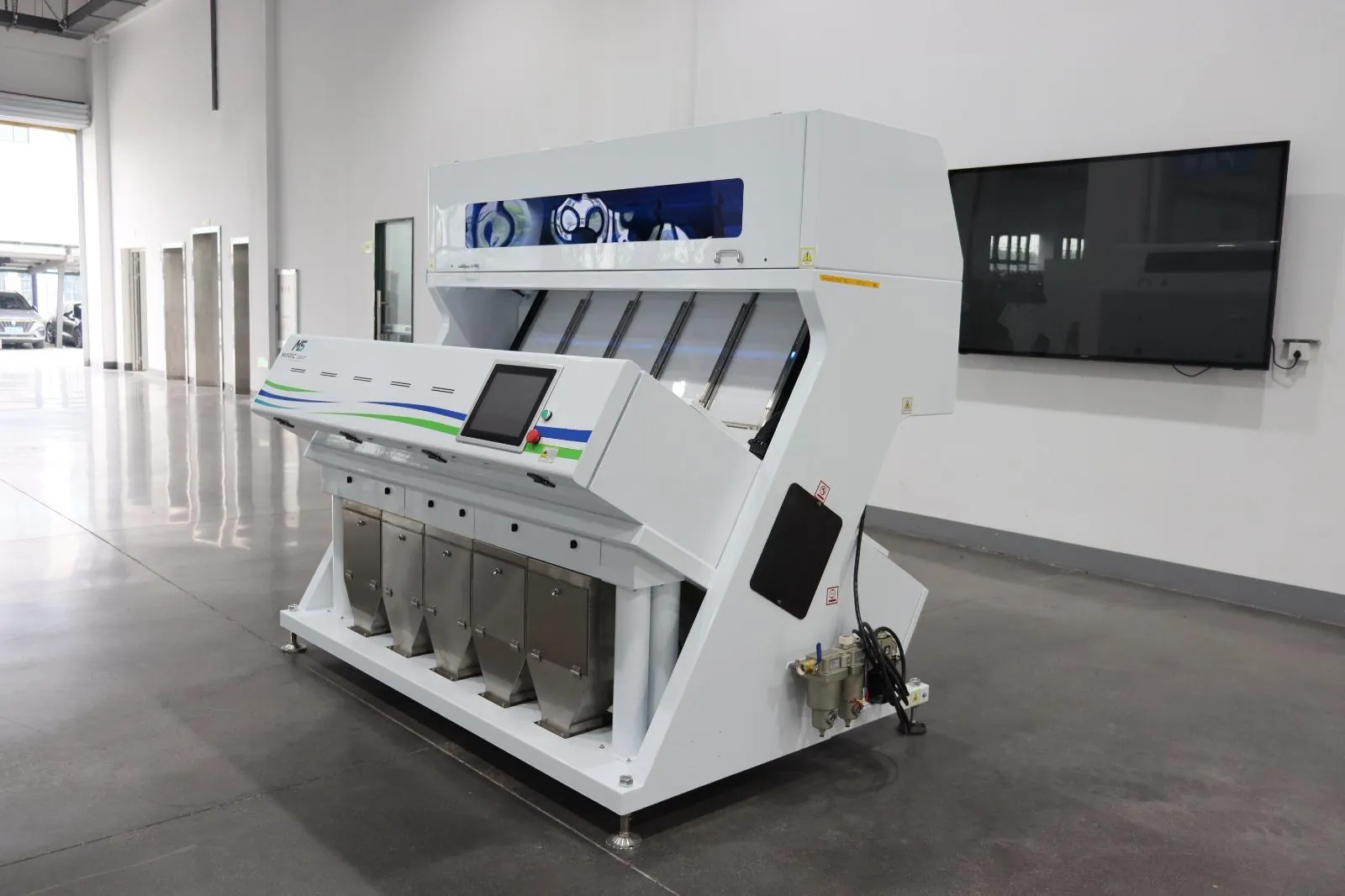
5 chutes
Capacity
4–7 t/h
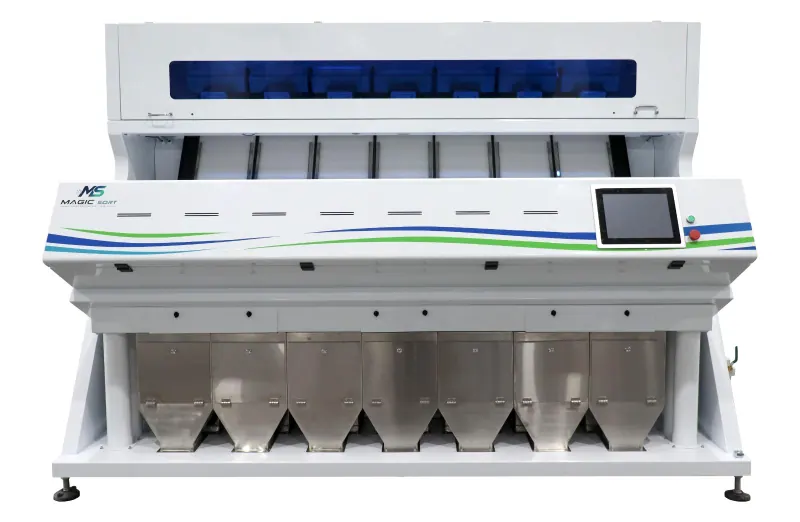
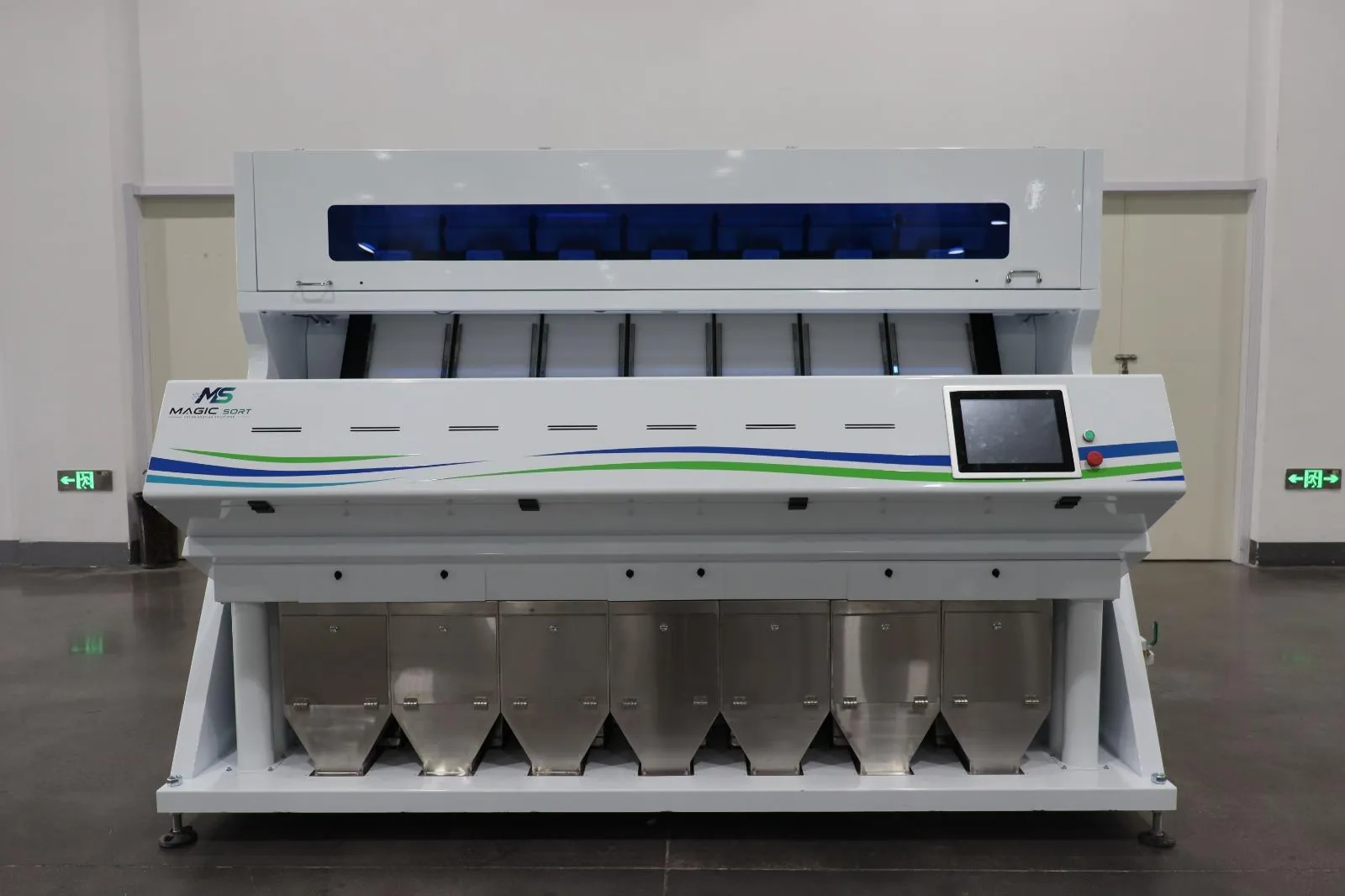
7 chutes
Capacity
6–10 t/h
10 chutes
Capacity
8–15 t/h
Tell us your material, its impurity level and your output, and we’ll recommend the model that fits.
Requirements
What to prepare before the machine arrives — and what we take care of.
AC 200–240 V, 50/60 Hz, drawing 3 to 5.5 kW depending on the model, with a dedicated earth line. A voltage stabiliser is recommended.
0.6–0.8 MPa at 5 to 8 m³/min depending on the model, with water filters. Ideally the compressor sits within 20 m of the machine.
A level floor or solid platform, with at least 0.8 m clear in front and 0.5 m at the back and sides for operation and maintenance.
A 100 mm dust-extraction connection keeps the sorting box clean and performance consistent.
Gallery
The machines as delivered: white body, stainless-steel outlets and a touchscreen up front.
FAQ
Can’t find your question? Message us directly.
Chat with us on WhatsAppRice and all kinds of legumes, such as fava beans, lentils, chickpeas, white beans, cowpeas, peas and lupin beans. If you want to check your product, send us a photo of it on WhatsApp.
The main criterion is the capacity you need in tons per hour: the JM5 handles 4 to 7, the JM7 6 to 10 and the JM10 8 to 15. Tell us your material, its impurity level and your output, and we’ll recommend the one that fits.
Sorting accuracy is at least 99.99% under standard operating conditions, and drops slightly when the impurity level of the incoming material exceeds 5%. That is why we recommend pre-cleaning the material before color sorting.
It means that for every 10 defective grains sent to the reject outlet, no more than one good grain goes with them. The higher the ratio, the less good product you lose.
Yes. You need an air compressor supplying dry, oil-free air, a dust-extraction line, and elevators to feed the machine and take the product away, laid out to suit your site. This equipment is not part of the machine.
Single-phase AC 200–240 V (50/60 Hz) at 3 to 5.5 kW, and compressed air at 0.6–0.8 MPa with a consumption of 5 to 8 m³/min, depending on the model.
No. It is operated from a single touchscreen with saved programs for each material, and the interface is available in English. Daily maintenance is an air-gun clean, with a weekly check of filters and cleaning brushes, and the machine shows an on-screen alert if anything goes wrong.
Delta for Trade is the sole distributor of Magic Sort machines in Egypt and the Middle East, based in Kafr Ash Shaykh, Egypt.
Message us on WhatsApp with your material, the capacity you need and where your plant is, and we’ll send you a quote for the right model.
Contact
Fill in the details below and a WhatsApp chat opens with your message ready to send.
Sole distributor in Egypt and the Middle East
Delta for Trade
What happens next?